Retina care from a surgeon who operates in the open.
From injections for wet macular degeneration to surgery for epiretinal membranes, macular holes and retinal detachments, your care stays with one retina specialist. Every retina surgery Dr. Arroyo performs takes place in Boston Vision's own surgical suite, not a hospital operating room, and his cases are streamed on stych.tv so that surgeons around the world can watch and learn.
Conditions of the retina and the vitreous.
The retina is the thin layer of light-sensing tissue at the back of the eye. Its center, the macula, gives you reading and face-recognition vision. These are the conditions Dr. Arroyo treats most often.
Wet macular degeneration
Leaking blood vessels under the macula. Injections can stabilize vision, and many patients gain some back.
SurgeryEpiretinal membrane
A thin scar layer on the macula that wrinkles it, so straight lines look wavy. Removed by peeling.
SurgeryMacular hole and lamellar hole
A full or partial break in the center of the retina. Closed with membrane peeling and a gas bubble.
Urgent surgeryRetinal detachment
The retina pulls away from the wall of the eye. An emergency: repaired with gas, freezing treatment or vitrectomy.
Vitreous Opacity CenterFloaters that degrade vision
Refractive vitrectomy for floaters, with its own site, evidence and self-check.
Urgent: these symptoms need an eye exam the same day
Sudden flashes of light, a shower of new floaters, a curtain or shadow moving across your vision, or a sudden drop in vision can mean a retinal tear or a detached retina. In a review of published studies, about 1 in 7 people with sudden new flashes or floaters from a vitreous detachment had a retinal tear.[10] A tear found early can often be sealed in the office. Call 617-202-2020 the same day, or go to an emergency department if you cannot reach us.
Every surgery, in our own suite.
Dr. Arroyo performs all of his retina surgery in Boston Vision's office-based surgical suite in Brookline. You come to the same building you know from your visits, you are cared for by the same small team, and you go home the same day.
Numbed carefully, awake and comfortable
At the start of surgery, Dr. Arroyo numbs the eye carefully, both the surface of the eye and the area behind it. plain-language name of the block used Oral sedation is available if you would like it to relax. Most of his patients choose none. There is no general anesthesia.
What the day looks like
- You arrive at the suite and the team checks you in and prepares the eye.
- The eye is numbed. You will feel pressure at most, not pain.
- Surgery is done through tiny openings, usually with no stitches.
- You rest briefly, receive your instructions, and go home with a companion.
- We see you the next day. first post-op visit timing
accreditation body for the suite (for example AAAHC, AAAASF, Joint Commission), or delete this line
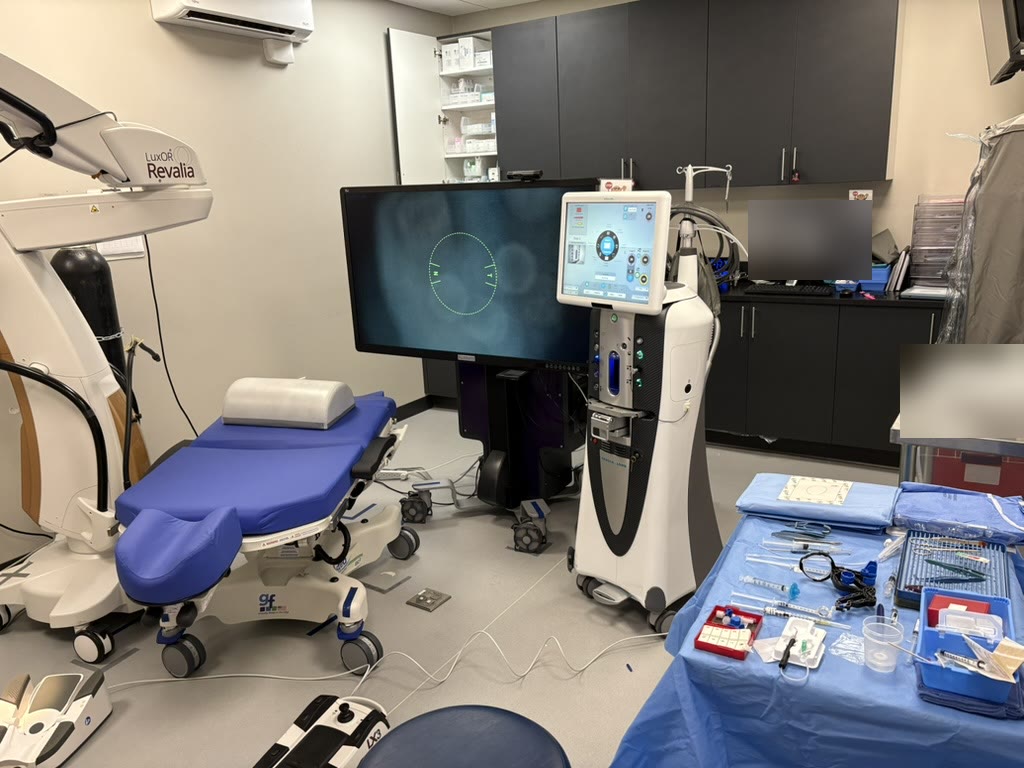
The same team, every case
Retina surgery here is done by a small, dedicated surgical team, so the people who greet you are the people in the room. team names and roles, if you want them listed

deploy.sh).
Watched by surgeons around the world.
Dr. Arroyo streams his cases on stych.tv, a platform for teaching eye surgery, so that ophthalmologists anywhere can watch how he handles each step, including when something unexpected happens.
For Dr. Arroyo this is teaching, not marketing. He spent 25 years on the Harvard Medical School faculty training residents and fellows, and stych.tv carries that teaching on from his own surgical suite. For you, it means your surgery is done to a standard he is willing to show his peers, case after case.
The camera sees only the inside of the eye through the operating microscope. Your name and face are not shown. You are asked for your permission first, and saying no has no effect on your care. live, recorded or both; and how consent is recorded
You can watch short clips of the operations described on this site on the retina surgery page, and the injection technique on the wet AMD page.
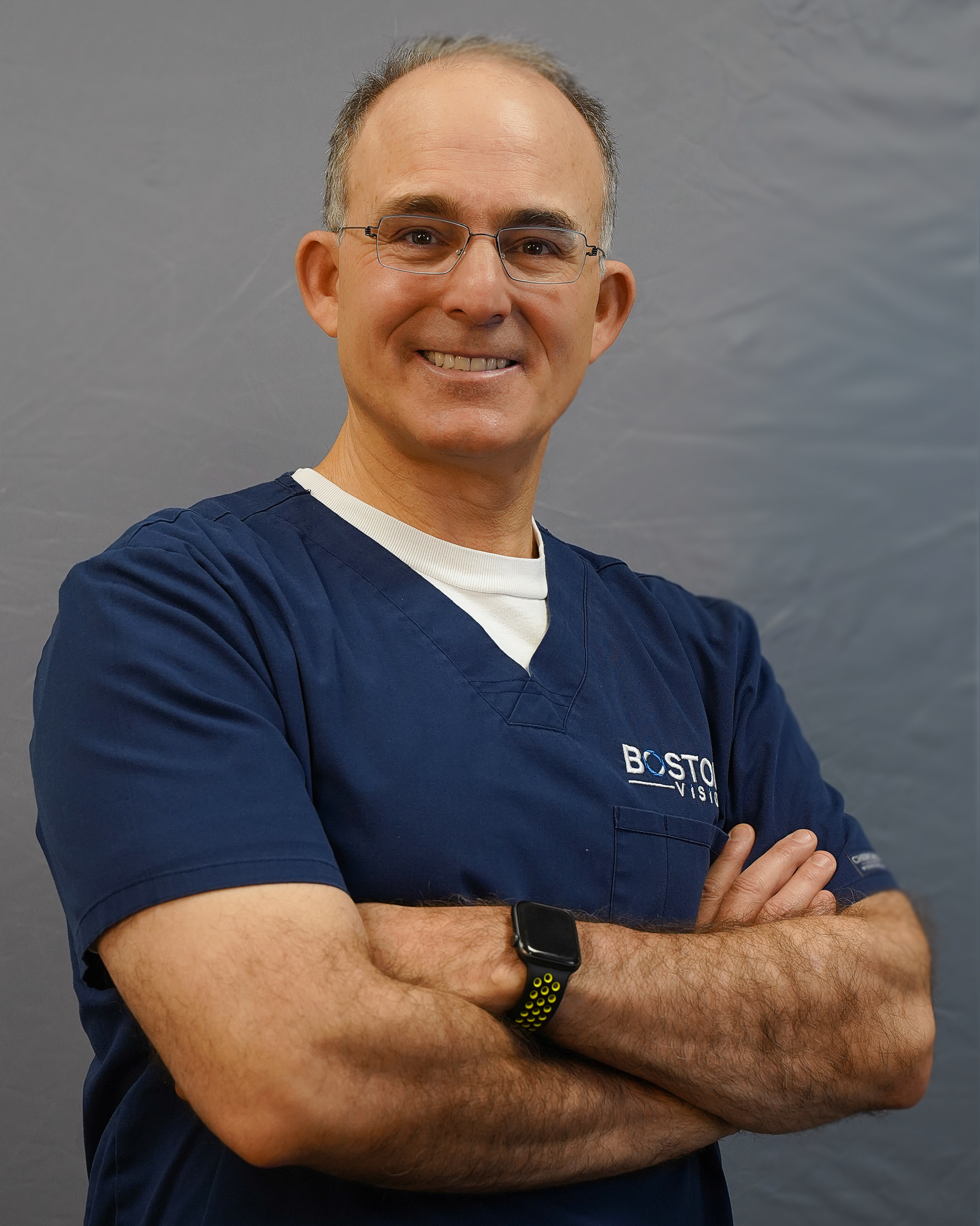
Jorge Arroyo, MD, MPH
Board-certified retina surgeon. He trained at Duke under Robert Machemer, the surgeon who invented modern vitrectomy, and taught at Harvard Medical School for 25 years.
- Medical schoolYale
- ResidencyUniversity of California, San Francisco
- FellowshipVitreoretinal surgery, Duke University
- Teaching25 years on the Harvard Medical School faculty
- ResearchMore than 60 published research papers
Check your central vision with an Amsler grid.
Wavy lines or a missing patch on this grid can be an early sign of a problem in the macula. This is for education only; it is not a diagnosis and does not replace an eye exam.
- Wear your reading glasses, if you use them, and hold the screen at reading distance.
- Cover one eye and look steadily at the center dot.
- Without looking away from the dot, notice whether all the lines look straight and every square is there.
- Repeat with the other eye, then answer for whichever eye looked worse.
Your answers stay on your device; nothing is sent or stored.
Please answer all three questions first.
This self-check is educational and does not diagnose any condition or replace an eye examination.
Send us your retina patients.
Optometrists and ophthalmologists refer patients to Dr. Arroyo for wet AMD, macular surgery and retinal detachment. how results are reported back to the referring doctor
- Urgent referrals Suspected retinal detachment or new wet AMD: call 617-202-2020 and ask for a same-day retina slot. direct referral line or fax, if different
- Routine referrals Epiretinal membrane, macular or lamellar hole, and second opinions. how referral notes and imaging should be sent
- Watch the surgery Dr. Arroyo's cases stream on stych.tv. Referring doctors are welcome to watch how their patients' operations are done.
What patients ask before retina surgery
Will I be awake?
Yes. The eye is numbed carefully at the start, so you should feel pressure at most. Oral sedation is available if you want help relaxing; most of Dr. Arroyo's patients choose none. Your face is covered by a sterile drape and you will not see the instruments.
Why is the surgery done in the office and not a hospital?
Our suite is built and staffed for eye surgery only. You are treated by the same small team in a familiar building, you go home the same day, and you avoid a hospital admission. whether any patients are not suitable for the office setting, the emergency transfer arrangement, and accreditation
Will my operation be streamed?
Only with your permission. The camera shows the inside of the eye through the microscope, never your face or name, and saying no has no effect on your care.
Is it covered by insurance?
Medically necessary retina treatment is usually covered by insurance, but plans differ. Our staff review your coverage with you before anything is scheduled.
Talk to a retina specialist.
For a consultation or a second opinion, send us your details and the office will call you to schedule. For sudden symptoms, call 617-202-2020 instead.
Tell us how to reach you
This goes directly to Dr. Arroyo's office to schedule your visit. It is not for urgent problems: for sudden flashes, new floaters, a curtain over your vision, or pain after an injection or surgery, call 617-202-2020 now. For a medical emergency, call 911. Please don't include detailed medical information here. Email isn't a secure way to share it. We'll discuss your symptoms when we contact you.
Surgical suite
Boston Vision, OBS Surgical Suite
24 Webster Place
Brookline, MA 02445
Phone
Injections and visits
which Boston Vision locations offer retina visits and injections
Every claim on this site, with its source.
- Hollands H, Johnson D, Brox AC, Almeida D, Simel DL, Sharma S. Acute-onset floaters and flashes: is this patient at risk for retinal detachment? JAMA. 2009;302(20):2243-2249. Systematic review. Among patients presenting with an acute posterior vitreous detachment, about 14% had a retinal tear.